The difference between a dedicated photography game drive and a standard game drive in the Masai Mara is not just about camera equipment. It is about timing, pacing, patience, vehicle configuration, guide skill, and what you are trying to come away with. For some travelers, a general game drive is exactly right. For others, choosing a photography-specific setup transforms what the Mara delivers.
Here is a clear breakdown of both approaches, who each suits, and how to decide which belongs in your itinerary.
What Is a General Game Drive?
A general game drive is the standard Masai Mara safari format. You depart camp in a 4WD vehicle — typically a customized Land Cruiser or Land Rover with a pop-up roof — with a guide and driver and between two and five other passengers. The guide navigates using personal knowledge of the reserve and radio communication with other guides to locate wildlife. You see as much as possible across the drive window.
General game drives are usually:
- Three to five hours (morning departure around 6 AM, or afternoon departure at 3:30 to 4 PM)
- Shared with other passengers in the same vehicle
- Paced to keep the group engaged, which means moving on when most people in the vehicle are ready
- Focused on seeing diverse wildlife rather than on photographic conditions at any given sighting
For most safari travelers, this format is excellent. The guide’s narration, the shared energy of unexpected sightings, and the cumulative wildlife experience across three or four drives produce a genuinely rich Mara experience.
What Is a Photography Game Drive?
A dedicated photography game drive changes the setup, timing, and approach at every level:
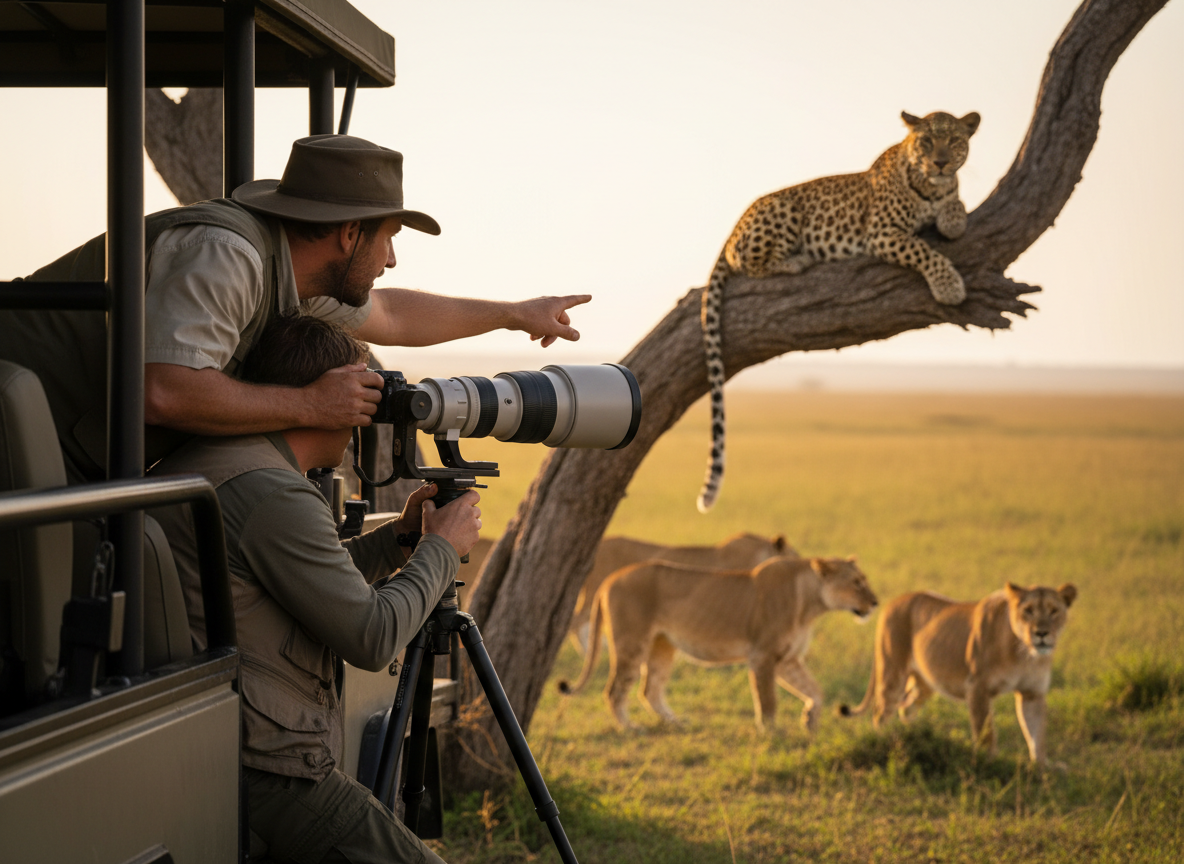
Vehicle configuration. Photography vehicles are modified for camera work. Standard seating is replaced with beanbags or custom camera mounts that allow telephoto lenses to rest steady and stable. Windows are lowered or removed entirely. Low-profile shooting positions minimize the noise and instability of handheld shooting at long focal lengths. The vehicle is configured around the camera, not the seat.
Private access. A photography drive is almost always a private arrangement — you and a companion, or a small group of two to three photographers with shared goals. There is no one in the vehicle on a different schedule, no social dynamic that creates pressure to move on from a sighting.
Golden hour timing. Photography drives prioritize the first 90 minutes after sunrise and the last 90 minutes before sunset. These are the windows of directional, warm, low-angle light that transforms wildlife photography — the light that puts dimension into a lion’s mane and color into a cheetah’s coat. A standard general drive may depart at similar times, but it does not structure the day specifically around maximizing time in those light windows.
Patience at sightings. A photography guide understands that you may want 45 minutes at a single cheetah on a termite mound. You are watching for a specific behavior: the moment the cheetah’s gaze locks onto prey, the first steps of a stalk, the explosive acceleration of a hunt. A shared vehicle cannot accommodate that level of patience without compromising the experience for other passengers.
Guide specialization. Guides on photography drives are selected for the ability to anticipate animal behavior rather than simply locate animals. Knowing which direction the lioness will approach the waterhole, reading the ears and posture of a cheetah in pre-hunt mode, positioning the vehicle at the right angle before an event rather than reacting to it after — these are skills that separate photography guides from general wildlife guides.
Side-by-Side Comparison
| Factor | Photography Game Drive | General Game Drive |
|---|---|---|
| Vehicle setup | Modified for cameras (beanbags, lowered windows, stable mounts) | Standard pop-top Land Cruiser or Land Rover |
| Passengers | Private or 2 to 3 photographers | Up to 6 passengers, mixed interests |
| Light timing | Strict golden hour focus; day structured around it | Dawn and afternoon departures with some flexibility |
| Sighting patience | As long as needed for behavior sequences | Group-paced; ready-to-move-on dynamic |
| Guide profile | Behavior-focused, photography-trained | General wildlife guide with narration focus |
| Cost | Higher (private vehicle plus specialist guide) | Lower (shared vehicle across passengers) |
| Ideal for | Serious photographers; telephoto lens users; portfolio building | All general safari travelers; casual and phone photographers |
| Flexibility | Maximum | Moderate |
Who Needs a Photography Game Drive?
A dedicated photography drive is the right choice if:
- You are carrying a large telephoto lens (300mm or longer) and need a stable, low shooting platform to use it effectively
- Light quality is central to your goals — you want directional morning and afternoon light on your subjects, not harsh midday overhead light
- You want time at sightings to capture behavior sequences rather than single-shot visits before moving on
- You are focused on specific subjects: a predator hunt from stalk to kill, a river crossing sequence, bird flight shots, close portraits of habituated animals
- You are building a portfolio or creating images for commercial, editorial, or competition purposes
- You have traveled the Mara before and want to deepen the photographic output of a return visit
A general game drive is the right choice if:
- You are shooting with a DSLR, mirrorless camera at moderate focal lengths, or a high-quality smartphone
- Seeing as wide a range of wildlife as possible matters more than photographic perfection at individual sightings
- You are traveling with non-photographer companions who want the full shared game drive experience
- Cost is a constraint and you want the most accessible and efficient game drive format
The Hybrid Approach
Many travelers combine both within the same safari. A standard Masai Mara itinerary typically includes two game drives per day (morning and afternoon). Replacing one or two of those with dedicated photography drives — while keeping the remaining standard drives — gives photographers the golden-light sessions they need without sacrificing the overall breadth of wildlife coverage.
For a photographer spending four nights in the Mara, a structure like this makes sense:
- Arrival afternoon: general game drive (orientation to the reserve)
- Day 2 morning: photography drive (early golden hour, predator-focused)
- Day 2 afternoon: general game drive
- Day 3: full-day photography drive with packed lunch (stays in field through migration crossing or cheetah territory)
- Day 4 morning: photography drive
- Day 4 afternoon: general game drive (covers different reserve zones)
This structure produces both the photographic depth of dedicated sessions and the wildlife breadth of general coverage.
Cost Difference
Expect a dedicated photography drive to cost 40 to 100 percent more per person than a standard shared game drive, depending on the operator and vehicle specification. The cost difference reflects three components:
- Private vehicle hire: You are paying for the full vehicle, not a per-person share
- Specialist guide rate: Photography-trained guides command a premium over standard rates
- Extended field time: Photography drives often run longer than standard drives, particularly when behavior sequences require patience
For a photographer who has invested in serious camera equipment, the cost of a photography-configured vehicle and guide is proportionally small relative to the value of the photographic output it enables.
Practical Notes for Photography Drivers in the Mara
Lens recommendations: A 400mm prime or 100-400mm zoom is the practical minimum for Mara wildlife photography at meaningful working distances. The 500mm or 600mm range produces more flexible results for smaller subjects (cheetah cubs, birds) and allows more natural framing at closer distances.
Vehicle height: The standard pop-top Land Cruiser sits higher than ideal for ground-level predator shots. Purpose-built photography vehicles sit lower. If ground-level compositions are a priority, confirm that the vehicle is actually modified rather than a standard Land Cruiser described as photography-friendly.
Dust: The Mara’s dry season tracks generate significant dust behind vehicles. Position requests to your guide for upwind approaches where the lighting allows.
Guide briefing: Before your first photography drive, brief the guide specifically on what you are after — whether that is a specific species, a specific behavior, or a specific quality of light. The more precisely the guide understands your goals, the better they can position the morning around achieving them.
What to Read Next
- Masai Mara photography guide: best locations, timing, and equipment for the Mara
- Great Migration photography: how to position for river crossing shots
- Private game drive vs shared: when paying for a private vehicle is worth it
The right vehicle and guide setup multiplies what the Masai Mara delivers photographically. Get that decision right and the Mara will meet any serious photographer’s expectations.
Every trip described here can be tailored: dates, budget, camps, and pace built around you.
Get a Personalised SafariFurther reading
Related Kenya safari guides
- Northern Kenya Photography Safari Guide: Light, Locations, Field Workflow
- Kenya Migration Safari Cost 2026: Budget to Luxury Breakdown
- Masai Mara Green Season Safari: Value and Wildlife Guide
- Private Game Drive vs Shared Game Drive in Masai Mara: An Honest Comparison
- What to Wear in Masai Mara: Safari Packing Guide